When Showing Your Work Became a Work of Its Own
I want to tell you something that might be a little uncomfortable: the creator who posts about how much they've been struggling lately, with the perfectly lit photo of their journal and a caption that hits every emotional beat just right — they might be being completely genuine. Or they might not. And increasingly, it's getting hard to tell the difference. Even for them.
The behind-the-scenes era of content creation started with genuinely good intentions. Somewhere around the mid-2010s, a collective fatigue set in around the relentless highlight reel — the flawless outcomes, the aspirational aesthetics, the success stories with no visible seams. Audiences started craving something that felt more human. Creators responded. They started showing the process, the mess, the doubt.
And then the algorithm figured out that vulnerability performed well. And everything got complicated.
The Rise of Struggle as Aesthetic
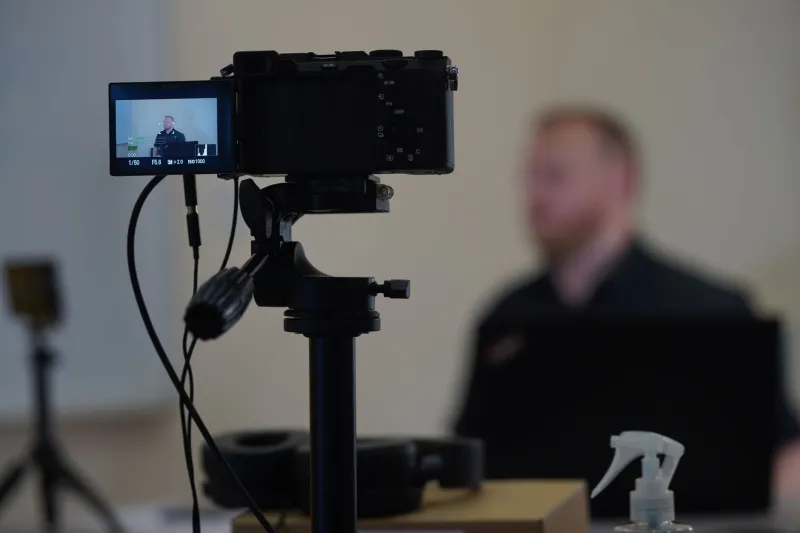
There's a specific visual language that has developed around creative authenticity online. You probably recognize it immediately: the candid-looking photo that took forty-five minutes to set up. The "honest" caption that's been edited six times. The "I almost quit" story that arrives, conveniently, right when engagement has been dipping. The tearful video that somehow has perfect audio.
None of this is necessarily fake. People do struggle. Creators do almost quit. Tears happen, and sometimes cameras happen to be nearby. But the packaging of struggle into content has become so refined, so consistent in its rhythms and aesthetics, that it's worth asking an honest question: at what point does sharing your process stop being transparency and start being a performance of transparency?
This isn't just a cynical observation about other people's content. It's a question worth asking about your own.
The Feedback Loop Nobody Talks About
Here's where it gets genuinely tricky. When you share something vulnerable — a creative setback, a moment of doubt, an honest admission that something isn't going well — and that post performs better than almost anything else you've made, your brain takes note. You didn't necessarily plan to turn your struggle into a content strategy. But the data is right there, and it's hard to ignore.
Over time, this creates a feedback loop that can subtly reshape not just what you share, but how you experience your own creative life. You start noticing your difficult moments through a potential-content lens. You find yourself thinking about the caption before the feeling has even fully resolved. The struggle becomes, in some low-level background way, a resource.
This isn't a moral failing. It's a predictable response to incentive structures. But it does raise a real question about what happens to genuine creative honesty when honesty itself becomes a brand asset.
The Authenticity Ceiling
One of the stranger paradoxes of the behind-the-scenes content era is that the more polished and consistent your vulnerability becomes, the less it actually communicates. An audience that has watched you share your "raw" moments for two years starts to develop a subconscious familiarity with the format — the setup, the emotional arc, the resolution. It starts to feel like a genre, with its own conventions and expectations.
And at some point, the thing you were trying to do — connect genuinely with people who are going through something similar — stops happening, because the content has become too recognizable as content. The realness has been packaged into something that no longer feels real, even if every individual element of it is technically true.
This is the authenticity ceiling: the point at which the pursuit of performed transparency actually makes genuine transparency harder.
What Honest Actually Looks Like
I don't think the answer is to stop sharing your process, or to retreat into a purely finished-product presence. The instinct that started all of this — to be more honest about the reality of creative work — is a good one. The problem isn't the transparency. It's what happens when transparency gets optimized.
So what does actual creative honesty look like, as opposed to the performed version?
For one thing, it's often less tidy. Real struggle doesn't usually come with a clean arc and a lesson at the end. Sometimes you share something hard and you don't have a resolution yet, and you don't know when you will. That's a harder post to write and a harder post to perform — which is, ironically, part of what makes it feel genuine.
It's also often less timely. The most honest things you could say about your creative process are frequently the things you're not ready to share yet — not because you're protecting yourself from vulnerability, but because you haven't figured out what they mean. The impulse to share in real time is strong, but some of the most honest creative reflection happens after some distance.
And sometimes it means not sharing at all. Not everything that's true about your process belongs online. Not every hard moment needs to be content. The decision to keep something private — not because you're performing a curated image, but because it's genuinely yours — is its own form of creative integrity.
A Question Worth Sitting With
The next time you're about to share something vulnerable about your creative work, it's worth asking yourself a simple question: Would I share this if I knew it would get zero engagement?
If the answer is yes, you're probably being honest. If the answer is genuinely uncertain, that uncertainty is worth paying attention to — not as evidence that you're a fraud, but as useful information about why you're sharing and what you actually want from the exchange.
Being real about your creative process is valuable. It helps other people feel less alone in their own struggles, and it keeps you from building a presence that's completely disconnected from your actual experience. But the version of realness that's been workshopped into content and optimized for reach is something different — and the gap between the two is where a lot of creative people quietly lose track of what they actually think and feel about their own work.
The goal isn't to perform less. It's to know the difference.