One Scroll Too Many: How the Algorithm Is Quietly Convincing You to Quit

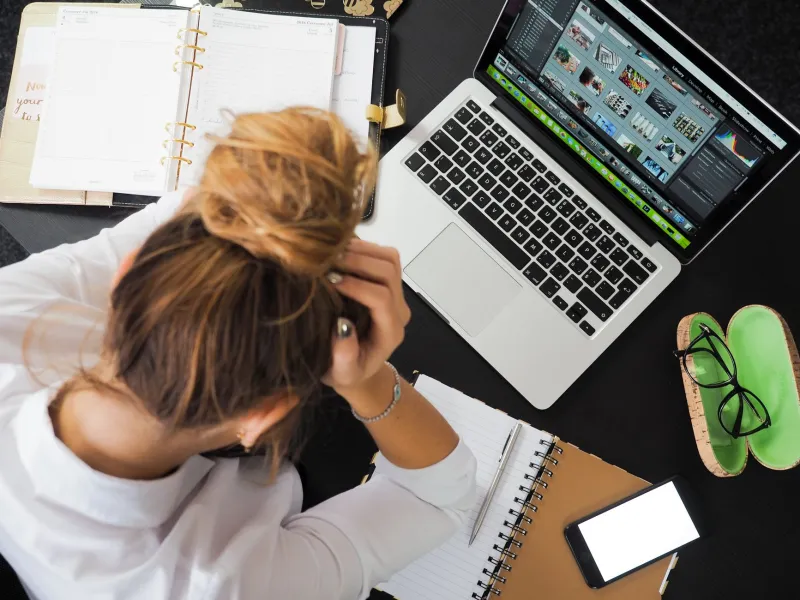
There's a specific kind of despair that only creative people know. You're deep in a project — maybe hour three of a recording session, or page forty of a draft that felt promising yesterday — and you pick up your phone for what you tell yourself will be thirty seconds. Then you see it. Someone in your exact field, making something so polished, so fully realized, that whatever you were just doing suddenly feels like finger-painting.
You put the phone down. You look at your work. You wonder if you should just stop.
Here's the thing nobody tells you about that moment: it was engineered.
The Machine Isn't Neutral
Social media platforms don't show you a random cross-section of creative work. They show you whatever earns the most engagement — which means the most striking, the most finished, the most impressive. The algorithm is essentially a highlight reel curator that never sleeps, constantly pulling forward the top one percent of output in any given niche and serving it directly to the people most likely to feel threatened by it.
If you follow photographers, you're not seeing average photographers on an average Tuesday. You're seeing the shot that got 40,000 likes. If you follow writers, you're not reading the messy drafts — you're reading the polished excerpt someone posted after their book deal came through. The feed is structurally incapable of showing you the mundane, the in-progress, the almost-there. It only speaks in finished products and peak moments.
And your brain, which hasn't fully caught up to the digital age, processes all of that as: this is what everyone else is doing right now, and you're falling behind.
Why Your Brain Is Especially Bad at This
Psychologists have a name for the tendency to compare your internal experience to other people's external presentation: it's related to what Leon Festinger called social comparison theory, and it's been part of human wiring for a long time. We've always measured ourselves against the people around us. The problem is that "around us" used to mean a few dozen people in our immediate community — not a curated global feed of elite performers.
When the comparison pool is that large and that filtered, you're essentially running a race where the only people you can see are the ones at the finish line. You never see the other runners who started when you did, who are sweating through the same mile you're on. You just see the tape being broken, over and over, by people who seem to have gotten there without breaking a sweat.
The result isn't motivation. For most people, it's a quiet erosion of belief in their own work.
What "Progress" Actually Looks Like in the Middle
Here's something worth sitting with: almost every creator you're comparing yourself to had a period — sometimes years — where their work looked a lot like yours does right now. The person whose podcast sounds effortlessly produced recorded dozens of episodes in a closet with a $40 microphone. The illustrator whose style feels fully developed spent a long time making work that felt derivative and confused.
You're not seeing that part because it doesn't get surfaced. It doesn't perform well. It doesn't get shared. It lives in hard drives and old Dropbox folders and private journals, which means it might as well not exist as far as the algorithm is concerned.
Your messy middle is real. Theirs was too. The feed just has no interest in telling you that.
Practical Ways to Protect Your Creative Environment
Knowing this intellectually doesn't automatically fix the feeling, but it does open the door to actually doing something about it. A few things that actually help:
Audit your follows like you audit your diet. Not everyone you follow is bad for your creative headspace, but some accounts are genuinely just making you feel terrible about your work on a regular basis. Unfollowing isn't petty — it's maintenance. You curate your physical environment; your digital one deserves the same attention.
Create a consumption/creation ratio that actually protects your work time. Some people swear by full phone bans during creative sessions. Others find that a simple rule — no social media until after you've done at least an hour of work — is enough to break the comparison spiral before it starts. The specific method matters less than the intentionality behind it.
Find a smaller, more honest community. The antidote to the algorithm's filtered highlights is real-time, unpolished connection with other people who are in the middle of their own work. That might be a Discord server, a local creative group, or even just one friend who's also building something. People in progress are the reality check the feed will never provide.
Notice the timing of your scrolling. Comparison hits hardest when you're already feeling uncertain about your work — which is exactly when most of us reach for our phones. Getting familiar with your own vulnerability windows (right before starting, right after a rough session, late at night) can help you put the phone down before the spiral begins rather than after.
The Work Is the Answer
At the end of the day, the only real protection against the comparison trap is the thing you were doing before you picked up your phone. The work itself. Not because finishing the project will prove something to the algorithm or to anyone else, but because the only timeline that actually matters is the one between where you started and where you're going.
Every creator you admire was, at some point, exactly where you are. They kept going anyway. Not because they stopped comparing — but because they eventually stopped letting the comparison make the decision.
Put the phone down. Get back to it.