The Yes Trap: How Saying Yes to Everyone Is Slowly Saying No to Yourself
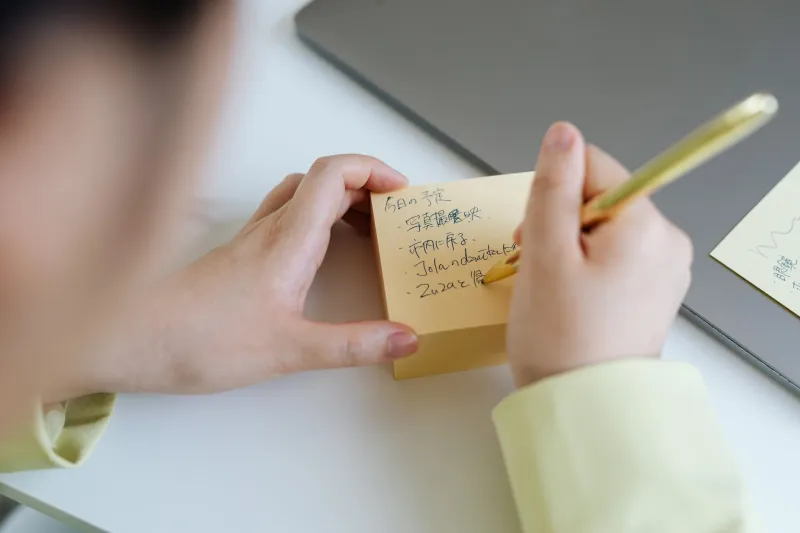
There's a version of you that exists in other people's plans. You're the one who said you'd look over their script. You're the collaborator on a project that was supposed to take two weeks and is now in its fifth month. You're the person who casually mentioned you'd design something, write something, record something — and now that casual mention lives rent-free in someone else's head as a firm commitment.
None of these things felt like a big deal when you agreed to them. That's kind of the whole problem.
What Creative Debt Actually Is
Financial debt is easy to track. There's a number. It shows up on a statement. Creative debt is sneakier — it's the accumulated weight of everything you've promised, implied, or quietly committed to that hasn't been delivered yet. It's the collab DM you left on read for too long and now feel guilty about. It's the friend's podcast you agreed to guest on three months ago. It's the community project you're technically still a part of even though you haven't contributed in weeks.
Individually, none of these things are crushing. Collectively, they are a ceiling.
The psychological term for what's happening here is something researchers call cognitive load — the mental bandwidth required to hold open loops in your head. Every unresolved commitment occupies a small but real portion of your working memory. And for creatives, working memory isn't just administrative space. It's where ideas form, where connections get made, where original work actually lives.
When it's full of other people's timelines? There's not a lot of room left for yours.
Why It's So Hard to Say No in the First Place
Let's be honest: most of us were never taught that saying no to creative requests was even an option. The cultural script for creatives — especially early in a career — is to say yes to everything. Take every opportunity. Be generous. Build relationships. And there's real wisdom in that, up to a point.
But there's also something else going on. Saying yes to a creative request from someone you respect feels like an affirmation of your own worth. They want to work with me. They think I'm good enough. Saying no, by contrast, can feel like slamming a door on a relationship, or worse, like you're acting like you're too important for people you genuinely care about.
So you say yes. And then you say yes again. And slowly, without any single dramatic moment you can point to, your creative schedule stops being yours.
The Moment You Realize You're Overdrawn
For a lot of creatives, the wake-up call isn't a breakdown. It's subtler. It's sitting down to work on your own project — the one that actually matters to you — and feeling nothing. Not blocked, exactly. Just... hollow. Like the engine is running but there's no fuel.
That hollowness is often creative debt calling in what it's owed.
When your mental and emotional energy is pre-allocated to other people's work, your own projects don't just get deprioritized — they get starved. And the longer that goes on, the more those projects start to feel like strangers. You lose the thread. You lose the urgency. Eventually you start telling yourself you just don't have any original ideas right now, when the truth is you haven't given yourself the conditions to find them.
Auditing What You Actually Owe
The first step is unglamorous: make a list. Write down every creative commitment you're currently carrying, from the formal (contracts, scheduled collaborations) to the informal (things you said you'd do, things people are probably expecting). Be ruthless about including the stuff that lives in the grey zone — the 'we should definitely do something together someday' conversations that have somehow calcified into mutual expectation.
Once it's on paper, ask yourself three questions about each item:
1. Did I actually agree to this, or did I just not say no? There's a difference. Silence and enthusiasm are not the same thing, even if someone else experienced them that way.
2. If this commitment disappeared tomorrow, would I feel relieved or disappointed? Your gut answer to that question is information. Trust it.
3. Is this moving me toward the work I actually want to make, or away from it? Not every collaboration is a distraction. Some are genuinely generative. The ones that aren't? They're just debt with better branding.
Getting Out Without Burning Everything Down
Here's the part people dread: actually reducing the load. The good news is that most creative commitments — especially the informal ones — are more negotiable than they feel. People are generally more understanding than we expect when we're honest with them.
A simple reframe helps: instead of 'I can't do this,' try 'I'm not in a place to give this what it deserves right now.' That's not a rejection of the person or the project. It's an honest accounting of your capacity. Most reasonable collaborators will respect that. And the ones who don't? That's useful information about the relationship.
For the commitments that are harder to exit — ones with real stakes or real relationships attached — consider renegotiating scope rather than bailing entirely. Can you do a smaller version? Can you push the timeline? Can you hand off part of your role to someone else?
The goal isn't to become someone who never collaborates or never helps. The goal is to make sure that when you say yes, it's a real yes — one backed by genuine capacity and genuine interest, not just the inability to disappoint someone in the moment.
Protecting the Work That's Actually Yours
Once you've cleared some space, guard it. This sounds obvious, but it requires an active practice, not just good intentions. Block time for your own projects the same way you'd block time for a client. Treat your original work like it has a deadline — because in a way, it does. The longer you defer it, the more distant it becomes.
And the next time someone comes to you with an exciting opportunity, a collab pitch, a favor that'll 'only take an hour,' pause before you answer. Ask yourself if there's genuinely room for it — not just in your calendar, but in your head. Because your creative bandwidth is finite, and the most important thing you can make is the thing only you can make.
Everything else is optional.