Why Your Brain Saves Its Best Work for Bedtime (And How to Stop Losing It)
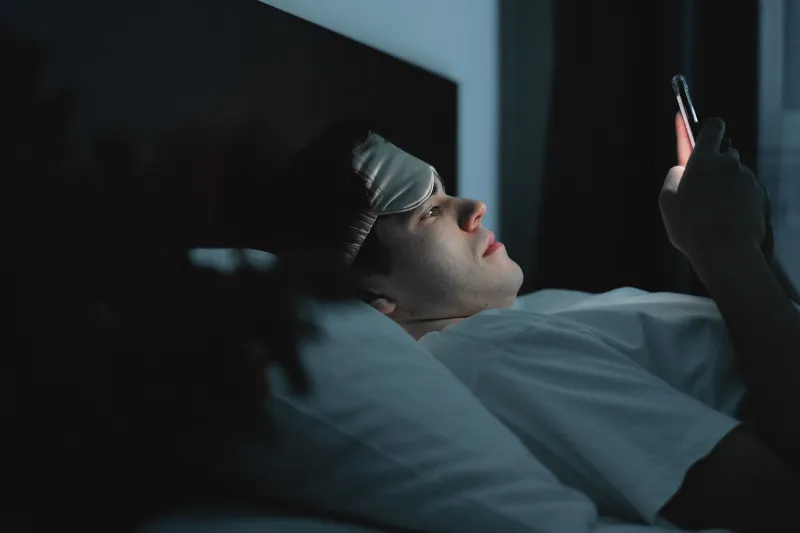
It happens to almost every creative person I've ever talked to. You've finally closed the laptop, brushed your teeth, turned off the light — and then, right as your eyes are drifting shut, there it is. The perfect opening line. The solution to the structural problem you've been circling for three weeks. The angle that makes the whole project click.
And then you think: I'll remember it in the morning.
You won't. You know you won't. But you're too tired to do anything about it, and so you lie there hoping, and by 7 a.m. it's gone like smoke.
This isn't a personal failing. It's not a quirk of your particular creative process. It's neuroscience, and once you understand what's actually happening up there, you can stop fighting it and start working with it.
What Your Brain Is Doing When You're Not Watching
Here's the thing about focused, task-oriented work: it actually narrows your thinking. When you're sitting at your desk trying to be productive, your prefrontal cortex — the part of your brain running the organized, logical show — is very much in charge. It's useful for executing. It's not always great for generating.
But when you start to wind down, something shifts. Your brain moves toward what researchers call the hypnagogic state — that fuzzy, half-awake zone right before sleep. In this state, your default mode network kicks in. This is the network associated with daydreaming, mind-wandering, and making unexpected connections between stored memories and ideas. It's essentially your brain's internal creative director, and it only really gets loud when your inner task-master quiets down.
The same thing happens during commutes, long showers, and any other low-demand activity where your conscious mind isn't white-knuckling a to-do list. Your brain slips into a looser, more associative gear — and that's where the good stuff lives.
So no, your best ideas don't come at inconvenient times by accident. They come at inconvenient times because those times are the ones when your brain is finally free to roam.
The Real Cost of Letting Those Moments Slip
Losing a single idea before bed might not feel like a big deal. But here's what actually happens over time: you start to distrust yourself. You remember having the idea — you remember the feeling of it, that little flash of yes — but you can't access it anymore. And that gap between knowing you had something and not being able to retrieve it is genuinely demoralizing.
Creative confidence is built on follow-through, even tiny follow-through. Every idea you capture and develop, even partially, reinforces the belief that your creative instincts are worth trusting. Every idea that evaporates before morning does the opposite.
This is what I'd call the creativity tax. You're doing the generative work — your brain is producing — but you're not collecting on it.
Building a Capture System That Doesn't Wreck Your Sleep
The instinct a lot of people have is to keep a full notebook by the bed and start writing the moment an idea arrives. And honestly? That can work. But it can also pull you out of sleep mode so completely that you're lying there at 1 a.m., suddenly very awake and trying to outline an entire project.
The goal isn't to turn bedtime into a second work session. The goal is to offload the idea from your brain with just enough fidelity that you can reconstruct it tomorrow — and then actually let go of it.
A few things that genuinely work:
Voice memos are underrated. Most people sleep with their phone nearby anyway. A 30-second voice note in the dark requires almost zero activation energy. You don't need to turn on a light, find a pen, or write a coherent sentence. Just mumble the core of the idea. Future you will figure out the rest.
Keep it brief and anchored. If you do write it down, resist the urge to develop it fully. One or two sentences that capture the essence of the idea — not the whole architecture. The point is to create a trigger, not a draft.
Use a dedicated capture tool, not your general notes app. When your ideas are scattered across random notes mixed in with grocery lists and work emails, you stop trusting the system. A single place for creative captures — whether that's a physical notebook, a dedicated app, or even a specific folder — makes it more likely you'll actually go back and develop them.
Schedule a weekly idea review. Capturing is only half the equation. Set aside 20 minutes once a week to scroll through what you've collected. Most of it won't hold up in the light of day, and that's fine. But the ones that do? Those deserve actual time and attention.
Making Peace with Your Off-Hours Brain
There's a mindset shift underneath all of this that's worth naming directly. A lot of creative people feel vaguely annoyed — or even guilty — when their best thinking happens outside of designated work hours. Like it means they're not productive enough during the day, or that they don't have their process under control.
But what if it just means you're a person with a brain that works the way human brains work?
The hypnagogic state isn't a bug. The wandering mind isn't a sign of distraction. These are features of a system that genuinely needs downtime in order to synthesize and connect. The most generative creative people I know aren't the ones who've figured out how to force insight on demand — they're the ones who've built lives that leave room for it to show up on its own schedule, and systems that catch it when it does.
You can't make yourself have the idea at a more convenient time. But you can make sure that when it arrives — at 11:30 p.m., in the middle of a Tuesday commute, or under a too-hot shower — you're ready for it.
Stop letting the creativity tax eat your best work. Set up the capture, trust the system, and then actually go to sleep.