Curate Your Creative Inputs Before They Quietly Curate You

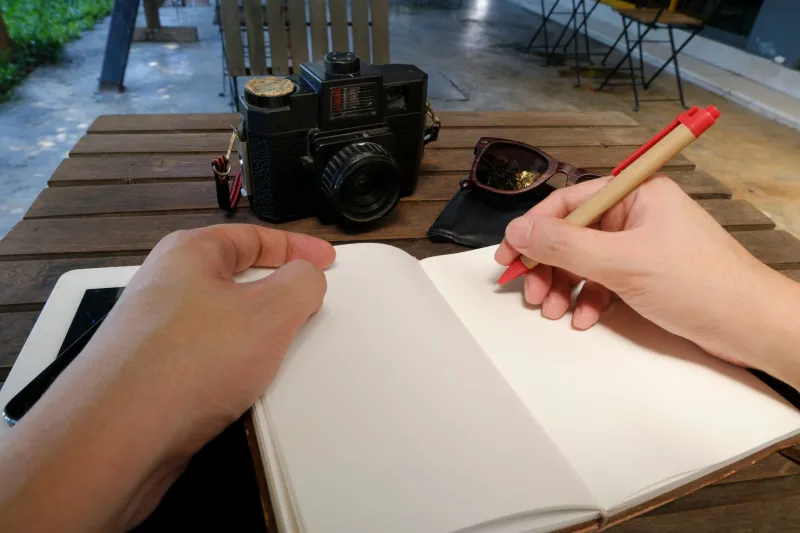
Photo by Photo by Vitaly Gariev on Unsplash on Unsplash
There's a specific kind of creative paralysis that doesn't announce itself. It doesn't feel like writer's block or burnout. It feels more like... fog. You sit down to work on your thing — your painting, your screenplay, your Substack, your Etsy shop — and instead of moving forward, you just kind of stare. Something feels off, but you can't name it.
Here's a hunch: you've been watching too many other people do their thing.
Not in a jealous, petty way. In a very human, very understandable way. But the result is the same — your creative judgment has quietly drifted away from your own instincts and started outsourcing itself to everyone else's highlight reel.
What Happens When You Consume More Than You Create
Your brain is a pattern machine. It's always scanning, comparing, categorizing. When you spend significant time consuming other people's creative output — especially polished, finished, algorithm-approved work — your internal baseline shifts.
Suddenly, your rough draft doesn't look like a rough draft. It looks like failure.
Psychologists call this social comparison theory, and it's been studied since the 1950s. The short version: we evaluate our own abilities and opinions by measuring them against others. That's not inherently bad — comparison can motivate and inform. But when the comparison is wildly lopsided (your raw process vs. someone's finished product, your early stage vs. someone's year five), it becomes actively distorting.
What makes it worse online is that you're not comparing yourself to one person. You're comparing yourself to the curated best-of reel of thousands of people simultaneously. Your nervous system doesn't know how to contextualize that. It just registers: everyone else is further along than me.
They're not. But it really, really feels like they are.
The Specific Flavor of Distortion Worth Watching For
This isn't just about feeling bad. It's about how comparison actually rewires your creative decision-making.
When you've been deep in someone else's aesthetic for too long, you start making choices based on what they would do rather than what you would do. You second-guess color palettes, sentence structures, musical arrangements — not because they're wrong, but because they don't look like the thing you've been staring at for the past three hours on Instagram.
You start editing your instincts out of your work.
That's the real damage. Not insecurity, exactly. More like creative identity erosion — a slow wearing away of your own point of view until you're not totally sure what you actually think anymore.
If you've ever finished a project and felt like it looked like a knockoff of someone else's work — even though you weren't intentionally copying them — this is probably why.
So What Do You Actually Do About It?
The answer isn't to delete all your apps, move to a cabin, and go off-grid. That's not realistic, and honestly, input matters. Consuming great work is part of how you grow. The goal isn't zero consumption. It's intentional consumption.
Start with a feed audit. Scroll through whoever you follow and ask yourself honestly: does this person's work inspire me, or does it make me feel like I'm behind? Those are two very different experiences. Inspiration generates energy. The other thing — that low-grade anxiety about your own relevance — drains it. You're allowed to unfollow people whose work makes you feel worse about yours, even if they're talented, even if they're nice, even if you feel guilty about it.
Create before you consume. This is simple and wildly effective. Before you open any social app or creative community in the morning, do at least a little bit of your own work first. Even fifteen minutes. You're priming your brain with your own voice before you start absorbing everyone else's. It sounds small, but it changes the whole texture of the day.
Build deliberate input windows. Instead of grazing on other people's work all day in tiny doses, try batching it. Give yourself a specific window — say, Tuesday evenings — where you intentionally look at work you admire. Then close it. This keeps you from the ambient, background-noise version of comparison that's hardest to notice and most corrosive over time.
Keep a "this is mine" file. Collect evidence of your own voice. Screenshots of work you made that you actually liked. Feedback that felt true. Pieces that felt authentically like you, even if they weren't your most popular. When your sense of your own creative identity gets fuzzy, this file is a compass. It reminds you: this is the direction. This is what Cris sounds like, what Cris makes, what Cris is building toward.
Rebuilding Trust in Your Own Eye
Confidence in your own creative judgment isn't something you either have or don't have. It's something you practice. And like a muscle that atrophies when you stop using it, your creative instincts get weaker the more you outsource your taste to the crowd.
The way back is boring and slow and it works: make things, finish things, look at them without immediately comparing them to someone else's version of the same thing. Let your work exist in its own context for a minute before you drag it into the arena.
You don't have to love everything you make. You don't have to think it's the best thing anyone's ever done. You just have to be able to hear your own voice in it — and that gets harder the louder everyone else's voice gets in your head.
The good news is that your perspective — the specific weird particular way you see things — is the only thing your work has that nobody else's does. That's not a small thing. That's actually the whole thing.
Stop watching long enough to remember what it sounds like.