Why Your Brain Saves the Good Stuff for the Shower
It's 11:47 PM. You've been staring at a blank document since 7. Nothing. You close the laptop, shuffle to the bathroom to brush your teeth, and somewhere between rinsing and spitting—boom. The idea. The good one. The one that makes the whole project click.
And then, because you are a human being with a cruel sense of irony, you forget half of it by the time you get back to your desk.
If this sounds familiar, you're not broken. You're not undisciplined. You're actually experiencing something that neuroscientists have been poking at for years, and the explanation is both fascinating and, honestly, a little annoying.
Your Brain Does Its Best Work When You're Not Watching
Here's the thing about focused, intentional work: it's kind of a creative buzzkill. When you sit down and try to have a great idea, you activate what researchers call the executive attention network—the part of your brain responsible for logic, filtering, and keeping you on task. That's useful for editing a draft or building a budget. But it's lousy for the loose, associative thinking that produces genuine creative breakthroughs.
The real magic happens when that network goes quiet. During a long drive, a hot shower, a morning jog, or the weird liminal space just before you fall asleep, your brain shifts into what's called the default mode network. This is where your mind wanders, makes unexpected connections, and pulls together threads you didn't even know it was holding onto.
The shower isn't special because of the water. It's special because you're not trying.
The Worst Time Is Actually the Right Time
There's a particular kind of frustration that comes with being a creative person who has a life. You carve out two hours on a Saturday morning to work on your project. You make the coffee, you open the file, you sit there—and your brain gives you absolutely nothing. Then you go grocery shopping, and somewhere in the cereal aisle, the perfect solution to the problem you've been stuck on for three weeks just arrives, fully formed, like it was waiting for you to stop looking.
This isn't random. It's actually your brain doing exactly what it's supposed to do.
Creative incubation—the period where you're not actively thinking about a problem but your subconscious is still working on it—is a documented psychological phenomenon. The ideas that feel like they come out of nowhere have almost always been quietly composting in the back of your mind, waiting for the right low-pressure moment to surface. The commute, the shower, the 2 AM half-awake haze aren't interrupting your creative process. They are your creative process.
The Real Problem: You Keep Losing the Goods
Knowing this is useful. But knowing it doesn't help if your brilliant shower idea evaporates before you've dried off, or if your 2 AM revelation is gone by morning.
The single most underrated creative habit is having a dead-simple capture system—something so frictionless that you'll actually use it in the moment, even when you're half-asleep or mid-shampoo.
Some options that actually work:
- Voice memos. Your phone's built-in voice recorder is faster than typing and works in the dark. Don't worry about sounding coherent. Just get it out.
- A waterproof notepad in the shower. Yes, these exist. Yes, they're worth it if you're someone whose best ideas are consistently hydro-generated.
- A dedicated notes app with a widget. The fewer taps between you and a blank note, the better. One tap, speak or type, done.
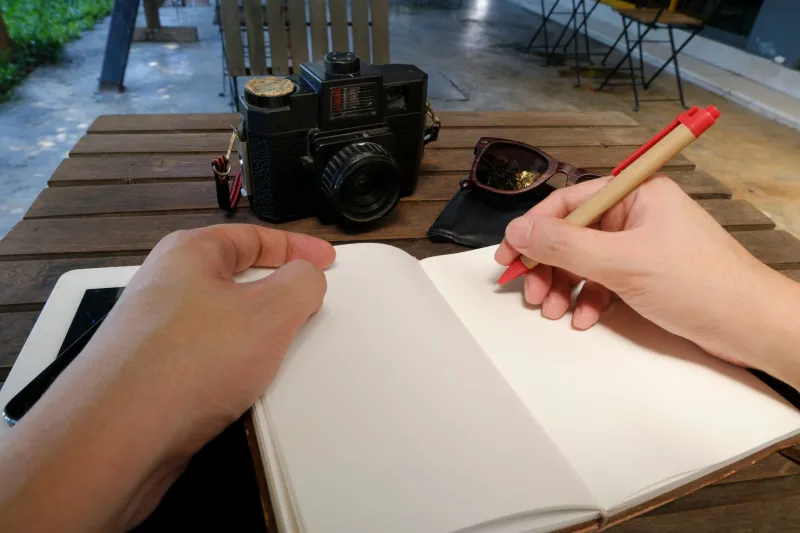
- A physical notebook on the nightstand. Old school, but the act of writing by hand can help cement the idea enough that you actually remember it.
The format matters less than the commitment. Pick one system and make it automatic.
How to Engineer More of These Moments
Here's where it gets interesting. You don't have to wait passively for inspiration to ambush you in the bathroom. You can actually design your days to create more of these off-mode windows—and pair them strategically with your focused work sessions.
Front-load the problem, not the solution. Before you take a walk or head into a meeting or do anything that lets your mind wander, spend five to ten minutes actively immersing yourself in the creative challenge you're working on. Read your notes, look at your drafts, sit with the question. Then let it go. You're essentially handing your subconscious a brief before it heads into the back room to work.
Protect your transition time. The space between tasks—the five minutes after a meeting ends, the walk from your car to the coffee shop—is prime default-mode territory. Resist the reflex to fill it with your phone. Let your mind drift. That's not wasted time. That's processing time.
Build in deliberate rest. This sounds counterintuitive, but scheduled downtime is a creative investment. A twenty-minute walk with no podcast, a lunch break where you actually step away from the screen, even a few minutes of doing something purely mechanical like washing dishes—these aren't breaks from the work. They're part of it.
Sleep is not optional. The hypnagogic state—that dreamy edge just before you fall asleep—is one of the most generative mental spaces available to you. Salvador Dalí reportedly used to nap holding a spoon over a metal plate so that when he drifted off, the clatter would wake him and he could capture whatever images were floating through his mind. You don't need a spoon. You need a notepad and permission to take that stuff seriously.
Stop Apologizing for Where Your Ideas Come From
There's still a weird cultural bias toward the idea of creativity as something that happens at a desk, during work hours, through sheer disciplined effort. And discipline matters—don't get me wrong. You still have to sit down and do the work of developing, refining, and finishing things.
But the spark? That's almost never going to come from staring harder at the screen. It comes from the in-between places, the idle moments, the weird hours.
Your job isn't to force the idea into existence during designated creative time. Your job is to set the conditions that make it likely to show up—and then be ready to catch it when it does.
Keep something nearby to write on. Let yourself be bored sometimes. Trust that the work you're doing in your focused sessions is feeding the subconscious process happening underneath everything else.
The shower will keep delivering. Make sure you're actually keeping what it gives you.


