Ten Years of Work, One Broken Link: Fixing Your Creative Archive Before It Disappears
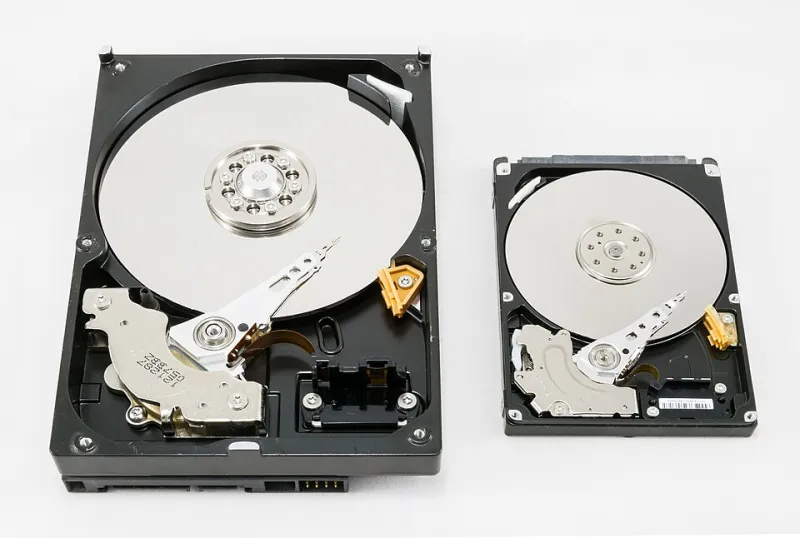
Photo: Jacek Halicki, CC BY-SA 4.0, via Wikimedia Commons
A friend of mine spent a weekend last fall trying to find a project she made in 2016 — a short documentary she was proud of, the one that got her real freelance work. It wasn't on her drives. The Vimeo account was deleted. The client's website had been redesigned twice. Ten years into a career, and her single most important portfolio piece had effectively ceased to exist.
Multiply that by every project you've ever made and you'll see the problem. Creative output accumulates, but it almost never gets organized. And unlike a law firm or a dentist's office, nobody hands you a filing system on day one.
Where the Work Actually Lives Right Now
Do a quick mental inventory. Your last five years probably look like this:
- Final files on a laptop that will die without warning
- Older projects on an external drive in a drawer, format unknown
- Work that only exists on a social platform — Instagram posts, tweets, a TikTok you can't even access anymore
- Client work behind a login for a company that no longer exists
- 'Final_v7_FINAL_actualfinal.psd' somewhere in a Downloads folder
This isn't laziness. It's the default state. Every platform you've used was built for distribution, not preservation. When the platform dies or you move on, your work dies with it — or becomes effectively unreachable, which amounts to the same thing.
The Minimum Viable Archive
You don't need a museum-grade system. You need three things:
1. One master drive (with one backup). A single location — external SSD or a cloud folder — where every finished project's final files live, organized simply: Year_ProjectName. Not versions, not drafts. Finals plus whatever source files you'd need to revive it. Back it up once, somewhere else. That's it. The 3-2-1 backup rule is nice; one backup is infinitely better than zero.
2. A one-page index. A spreadsheet or note with a row per project: title, year, one-line description, where the files are, and a link if it's public. This sounds tedious until you realize it takes about four hours for a decade of work, and it's the difference between 'I made something like that once' and sending the actual link in thirty seconds.
3. A public-facing home. A simple portfolio site, or even one well-organized page. It doesn't need to be fancy — it needs to be yours, on a domain you own, so no platform migration can take it from you. If crismoran.com is your name, that's the single most defensible URL you'll ever register.
What to Keep and What to Release
The other half of the problem is hoarding. You do not need every draft, every render, every voice memo from 2014. A useful filter:
- Keep finals and source files for anything you might revisit, reuse, or show.
- Keep process artifacts selectively — the sketch or draft that shows how you think, useful for teaching or case studies.
- Release the rest. The thirty abandoned versions of a logo are not heritage. They're noise that makes the real work harder to find.
If a project embarrasses you but shows your range or your growth, keep it — early work is often the most interesting evidence of a trajectory. If it embarrasses you and teaches nothing, delete it without ceremony.
Why This Is a Career Move, Not Chores
Here's what a working archive actually does. When an opportunity shows up — a pitch, a job application, a podcast invite — you respond in minutes with exactly the right piece. When a client says 'have you done anything like this?', you have receipts. When you doubt yourself, you can scroll a decade of finished work and see the evidence that you finish things.
And there's a subtler benefit: old work gets rediscovered. Pieces you forgot about find second lives — licensed, republished, turned into a new project. But only if they can be found. Unfindable work is, functionally, work you never made.
Block out one Saturday. Consolidate the drives. Build the index. Put your ten best pieces somewhere you own. Future you — the one with the opportunity in their inbox — will be very glad you did.